Bedding · A practical guide
How to Assess Quality Bedding: Fibres, Weave and Everyday Performance
A bed linen label can look like a small technical document. Fibre names, weave descriptions, finishes and washing symbols crowd together, while the simplest question—will this feel good and hold up to ordinary life?—is left to the reader. The answer begins not with a headline thread count, but with the fabric itself: what it is made from, how it is built, and what it asks of you in return.
There is a particular quiet ambition in good bedding. It is expected to be noticed when it is first unfolded, then to disappear into the nightly routine: cool when the room is warm, reassuring when it is not, easy to wash, and still presentable after the less picturesque business of sleeping. Assessing quality, then, is less like judging a polished object in a showroom than imagining a fabric through a year of use.
That distinction matters because smoothness is not the same thing as quality. A sheet can feel slick because of a finish applied during manufacturing, yet become less inviting after repeated laundering. Another may feel slightly crisp at first and grow softer as its fibres relax. The hand—the textile trade’s word for the way a cloth feels—offers a clue, but not a verdict. Fibre, yarn, weave, finishing and care instructions all contribute to the story.
Begin with the fibre label
Fibre content is the most useful first line of investigation. Cotton and linen are both plant-based fibres, but they do not behave alike. Cotton is familiar for its soft, adaptable feel and broad range of finishes. Linen, made from flax, is often valued for its distinctive texture, strength and ability to manage moisture. Neither name, on its own, guarantees that a finished fabric will be excellent. Fibre quality, yarn preparation, construction and finishing remain part of the equation.
For bedding, the fibre choice influences how a fabric feels against the skin, how quickly it moves moisture away, how it responds to heat and how it changes in the wash. Linen’s natural irregularities are part of its character. Those slight variations can give the surface a relaxed, lived-in appearance rather than the uniform smoothness some people associate with crisp cotton. That is not a defect; it is a different aesthetic and tactile experience.
Blended fabrics introduce another set of considerations. A blend may combine properties, improve ease of care or reduce cost, but the proportions matter. “Cotton blend” is not a complete description. Look for the stated percentages and consider whether the label explains what each fibre contributes. Vague language about natural or premium materials should not substitute for a clear composition statement.
Also consider the purpose of the textile. A duvet cover, a fitted sheet and a decorative throw do different work. A sheet is in close, prolonged contact with the body and is laundered frequently; a throw may be used occasionally, folded at the end of a bed or draped over a chair. A good fibre for one use is not automatically the best choice for another.
Thread count has a narrow job
Thread count is a measure of how many threads are woven into a square inch of fabric, counting lengthwise and crosswise threads. It can be informative when comparing fabrics made in similar ways, but it cannot tell the whole story. It says nothing by itself about the quality of the fibre, the fineness or strength of the yarn, the weave, or the finish. A large number may sound conclusive; in practice, it is only one piece of evidence.
There are other reasons not to treat a high count as an automatic mark of luxury. Manufacturers may count very fine yarns or multiple plies in ways that complicate comparisons. A dense fabric may feel substantial, but density is not the same as breathability or comfort. Meanwhile, a lighter cloth with sound yarn and thoughtful construction can perform beautifully, particularly for someone who tends to sleep warm.
A more useful approach is to read the specifications together. Fibre content tells you what the material is; weave helps explain its structure; weight, where provided, can suggest how substantial it may feel; and care instructions indicate how demanding it is likely to be. Thread count belongs in that conversation, not at its head.
What the weave changes
Weave is the arrangement of yarns crossing one another to form cloth. It affects texture, drape, durability and the way air moves through the fabric. A plain weave has a straightforward interlacing structure and can produce a crisp, balanced cloth. Sateen, which uses a different arrangement of yarns to expose more of them on the surface, often feels smoother and has a subtle sheen. Percale is commonly associated with a matte appearance and a cool, crisp hand, though the final feel also depends on fibre, yarn and finishing.
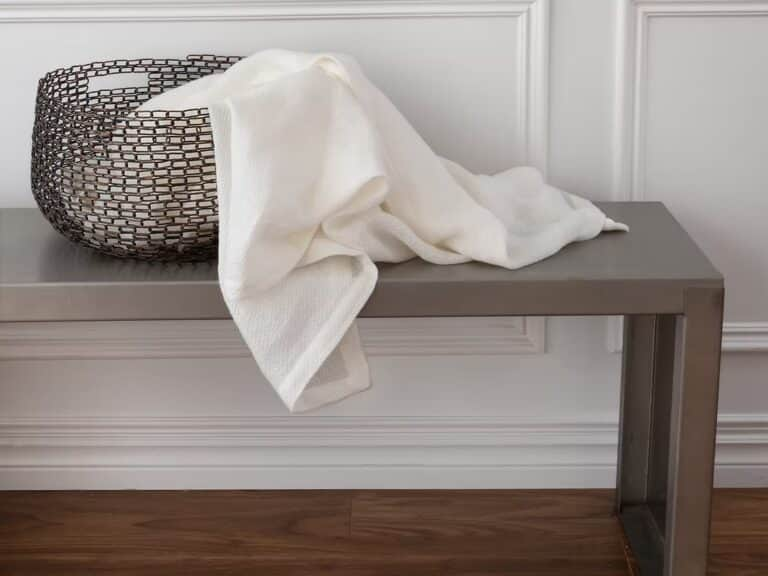
Linen may be made in a range of constructions, from relatively plain, open cloths to more textured designs. A honeycomb weave, for instance, creates a surface with raised and recessed areas. The pattern affects not only appearance but also the textile’s loft and drape. The St Geneve Avalon Linen Throw is described as a 100% linen throw woven in Portugal with a honeycomb weave and sewn in Canada. Its construction makes it a relevant example of how weave can give linen a more dimensional surface, rather than leaving it as a simple, flat plane.
That example is a throw, not a sheet set, and its performance should be understood accordingly. A decorative layer is judged by drape, texture and light warmth as well as laundering needs. It can, however, illustrate a broader principle: fibre content alone does not dictate how a textile behaves. The same fibre can produce notably different experiences when spun, woven and finished in different ways.
When possible, handle a fabric sample. Let it fall over your hand rather than merely rubbing its surface between your fingers. Notice whether it bends easily, springs back, feels dense or open, and has a finish that seems natural or unusually slick. For online purchases, detailed descriptions and clear care information become more important because the fabric cannot be examined in person.
Finishing: the part you may not see
After weaving, fabrics may undergo processes that alter their appearance and feel. Washing, brushing, calendaring and other finishing methods can soften, smooth or change the surface. Some finishes create an appealing first impression; others are intended to improve handling or stability. The details vary, and a product description may not spell out every step. What matters to the buyer is to avoid confusing an immediately silky feel with lasting quality.
Finishing can also affect how fabric behaves after it leaves the factory. A cloth may relax or shrink somewhat during early laundering, depending on its fibre and prior treatment. Clear guidance about washing and drying helps set expectations. Where dimensions matter—especially with fitted sheets—check the listed size and mattress-depth compatibility rather than assuming that a nominal bed size will fit every mattress arrangement.
Look closely at the practical details of sewing and finishing, too. Even hems, secure seams and well-finished corners are small signs of care. On a throw, a neat hem and mitred corners help the edges lie cleanly. On sheets and duvet covers, closures and seam construction influence ease of use and how well the item withstands repeated handling. These details seldom make a dramatic entrance. They are more likely to be appreciated during the hundredth change of bedding.
Imagine the everyday performance
“Breathable” is a useful but often loosely used word. In practical terms, bedding comfort depends on how the fabric interacts with warmth and moisture, and on the whole sleep environment: room temperature, mattress, duvet filling, nightwear and personal preference. Linen is frequently chosen by people who appreciate a relaxed texture and a less clingy feel. Cotton can offer a familiar softness in many different weights and weaves. The right choice is the one that suits the sleeper, not the one that makes the most persuasive claim.
Durability also has several meanings. A fabric may resist tearing but still pill, fade or lose its preferred texture. Another may soften attractively while becoming more creased. Linen’s characteristic creasing is often accepted as part of its appearance; for someone who wants a formally smooth bed, that may be a drawback rather than a virtue. Quality does not mean freedom from every sign of use. It means that the material’s ageing is acceptable to the person living with it.
Consider how often the item will be washed and whether you have the time and equipment its care requires. A beautiful textile that needs special handling may be a poor match for a busy household. Conversely, a careful laundering routine can help preserve a preferred fabric for longer. The honest measure of practical quality is not just how an item performs under ideal conditions, but how well it fits the habits of its owner.
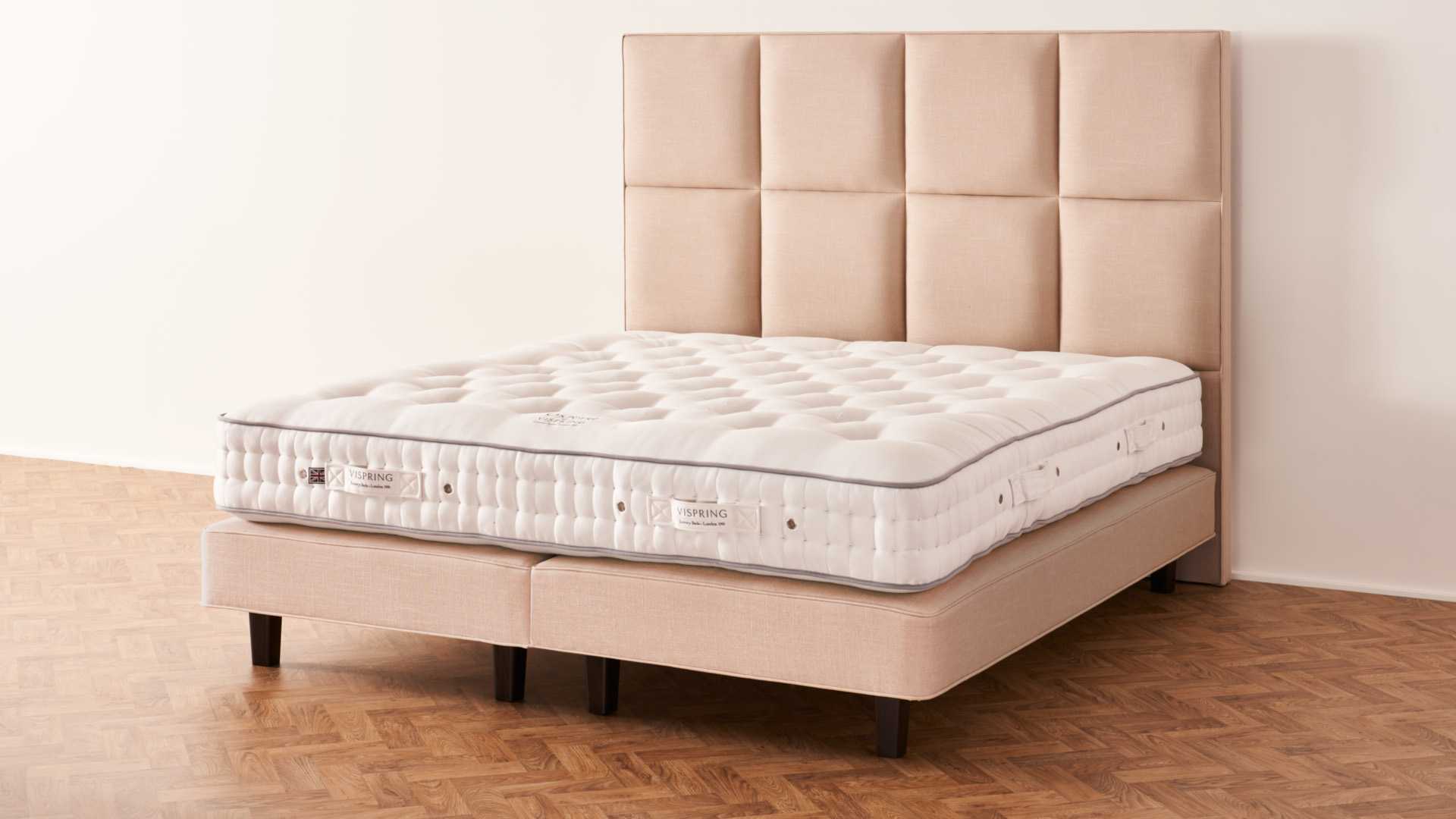
Mattresses and bedding layers should be considered as a system, though they are different products. A mattress provides support; sheets and covers create the surface that meets the sleeper. Natural fillings and breathable ticking can contribute to the feel of a mattress, but they do not replace attention to the bed linen’s own fibre and weave. For readers comparing the broader sleep setup, the Vispring Devonshire Mattress is described as using British fleece wool and hand-nested calico pocket springs, with several firmness options. Those construction details concern the mattress, not the quality of a sheet, but they illustrate why it is useful to assess each layer for the job it performs.
Care instructions are part of the specification
Care labels are sometimes treated as an afterthought, as if the fabric’s character has already been decided. In fact, washing and drying can influence feel, shape and lifespan. Instructions that specify water temperature, detergent or drying conditions should be read before purchase. If the routine seems incompatible with your household, that is valuable information—not an obstacle to be ignored.
For the St Geneve Avalon Linen Throw, the care guidance advises against overcrowding linen in the wash, recommends using a fabric bag to help prevent snags, and calls for a generous amount of water with very little detergent. It also advises against fabric softener, bleach and detergents containing bleach or whiteners, and says to use medium rather than hot settings and not to overdry. These directions are specific to the product; always follow the instructions supplied with the textile you own rather than applying one item’s guidance to every linen fabric.
Several general habits are useful when they align with the maker’s directions. Wash similar items together, avoid packing the machine so tightly that water cannot circulate, and use detergent sparingly enough to rinse cleanly. Residue can leave fabric feeling coated. High heat and overdrying may place unnecessary stress on fibres. If an item is prone to snagging, separating it from garments with hooks or rough fastenings can help protect the surface.
Fabric softener is not a universal solution to stiffness. It can leave residues, and some manufacturers advise against it for their products. A linen fabric that feels firm when new may soften through use and appropriate washing. Before reaching for an additional treatment, consult the care label; the simplest routine is often the safest one.
A practical checklist for comparing bed linen
When product descriptions begin to blur together, a short checklist can restore perspective. Ask:
- What is the exact fibre composition? Look for named fibres and percentages rather than broad claims.
- What is the weave? Decide whether you want a crisp, smooth, matte or visibly textured surface.
- Is thread count being used as the main proof of quality? Treat it as one specification among several.
- How does the fabric feel likely to change? Consider softening, creasing and any expected adjustment after washing.
- Are the dimensions clear? Check sheet depth, closures and the size of throws or covers against your intended use.
- Can you live with the care routine? Read temperature, detergent and drying instructions before committing.
- Are the construction details explained? Look for useful information about seams, hems, finish and origin where available.
- Does the textile suit its role? Assess a sheet as a frequently washed sleep surface and a throw as a flexible decorative or warming layer.
Quality is a relationship, not a number
There is no single specification that can announce, with perfect authority, that a piece of bed linen is good. Quality emerges from the relationship between material, construction, finishing and use. A fabric may be excellent for someone who loves a cool, textured surface and wrong for someone who wants a silky, crease-free finish. A product’s value is partly in its making and partly in how honestly its qualities match the buyer’s expectations.
That is why the most useful assessment begins with plain questions. What is this made from? How is it woven? What does the maker say about care? How will it feel after a season of washing, folding and sleeping? When descriptions provide clear answers, they allow a more thoughtful comparison than grand claims about luxury ever can.
Good quality bed linen is not necessarily the most elaborate, the smoothest on first touch or the one with the largest number printed on its label. It is bedding whose fibre and weave suit the sleeper, whose finish supports rather than disguises its character, and whose care requirements are realistic. The reward is modest but intimate: a bed that feels considered, night after night, without requiring the owner to think too much about it.