Bedding · Linen · Materials
Choosing a Breathable Throw for a Layered Bed
A throw is a modest object with an outsized assignment: it should lend a bed warmth, texture, and a hint of intention, without turning the whole arrangement into a textile traffic jam. The right choice depends on more than colour. Fibre, weave, size, and care all shape how a layer behaves once it leaves the showroom and meets an ordinary night.
Published 14 October 2026
There is a particular moment in making a bed when the essentials are already in place and the question becomes less practical than atmospheric. The sheets are smooth, the duvet has been pulled into something like order, and the room seems to be waiting for a final gesture. A throw can provide it. Folded at the foot, set across the lower third, or left in an agreeable heap, it adds a layer without requiring a new theory of sleep.
That apparent simplicity can be misleading. A throw that is too heavy may make an otherwise breathable bed feel stifling. A small one can appear decorative but prove inconvenient when someone reaches for it on a chilly evening. A fabric with a handsome surface may demand care that does not fit the household’s routine. The task, then, is not merely to choose a pleasing blanket. It is to find a piece whose material and proportions make sense alongside the bedding already in use.
For a layered bed, breathability is not an abstract virtue. It describes how comfortably the layers work together as the room’s temperature shifts and the sleeper settles in. Fibre and weave influence the feel of a textile, but so do its thickness, construction, and the way it is used. A lightweight linen throw, for example, can lend a little warmth at the end of the bed while remaining an easy layer to lift away.
What “breathable” means in a bed
In everyday conversation, breathable bedding is often described as fabric that lets air move and does not feel clammy. That is a helpful starting point, though no single word can predict the sensation of a whole sleep system. A mattress, mattress protector, sheets, duvet filling, bedroom temperature, and personal preference all contribute. The throw is one element in that arrangement, not a small climate-control device with a decorative border.
Linen is made from flax fibres, and linen fabrics are widely valued for their textured hand, durability, and capacity to absorb moisture. How a particular linen throw feels, however, depends on its construction and finishing as well as its fibre content. A loosely structured textile may feel airy and pliable; a dense or heavily layered one may feel more substantial. Even when two fabrics share a fibre, their weight and weave can give them quite different personalities.
This is why specifications are worth reading with a practical eye. “Lightweight” may suggest ease of layering, but it is useful to check the dimensions and weave description too. “Natural fibre” tells you something about composition, but not everything about warmth or drape. A throw’s performance on a bed emerges from the combination: what it is made of, how it is woven, how much fabric there is, and where it sits in relation to the sleeper.
There is also a difference between a bed that looks layered and one that feels layered. The former can be arranged for a photograph; the latter has to accommodate a person turning over at two in the morning. A breathable throw should be easy to move, comfortable against the skin if it is pulled up, and sufficiently light that it does not make the duvet feel unexpectedly cumbersome.
Why weave matters
Weave is the quiet architecture of a textile. It determines how yarns cross, how the surface catches light, and how the fabric bends when lifted or folded. It can affect texture, drape, and perceived weight, although the fibre itself remains only one part of the story. A close, compact weave may feel smooth and orderly; a more open or dimensional structure can seem lighter and more relaxed.
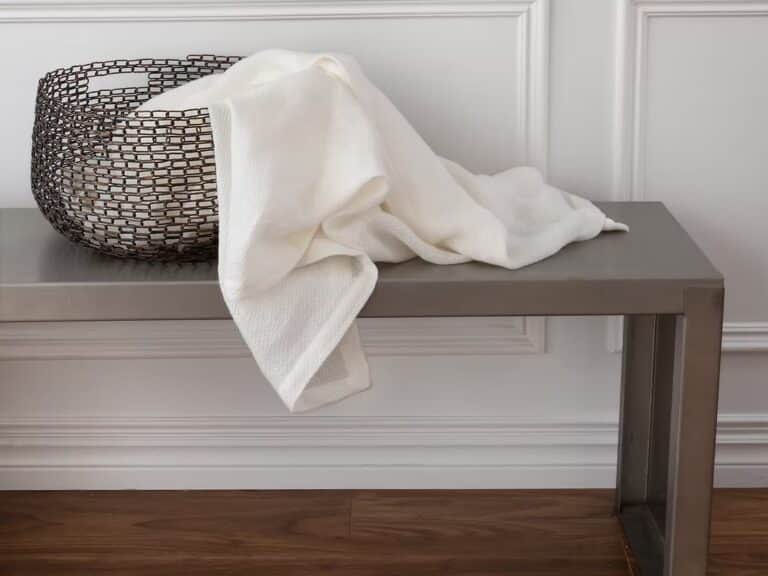
The St Geneve Avalon Linen Throw uses a honeycomb weave. Its raised, geometric surface gives the cloth more visual character than a plain, flat weave, while the structure allows it to fall with a soft drape. The effect is not theatrical. It is closer to the calm irregularity that makes a bed look lived in without looking neglected: texture you notice gradually, rather than a pattern announcing itself from the doorway.
Because the Avalon is made from 100% linen, the honeycomb surface is paired with the familiar tactile qualities of that fibre. The result is described as airy and lightweight yet cozy, a useful combination for a throw intended to add a modest measure of warmth rather than replace a duvet. At 49 by 70 inches, it can be placed across the lower part of many beds, although the way it covers a particular bed will depend on mattress width, styling, and whether the ends are tucked or left to fall.
Weave names can sound more conclusive than they are. A honeycomb structure does not guarantee that every textile will have identical softness, loft, or air movement. Nor does a textured surface automatically make a throw warm or cool. When assessing breathable bedding, treat the weave as one clue among several. Consider the stated fibre content, the overall weight if provided, and the kind of layer you actually need.
On a bed already dressed with a lofty duvet and substantial cover, a light throw may be enough to add a little extra comfort without crowding the arrangement. In a cooler room, it can offer a convenient covering for the feet or legs. In warmer weather, it may serve more as a tactile finish than as an additional source of insulation. The same object can have different jobs in different seasons; its usefulness depends partly on leaving it optional.
Fibre, feel, and the layers beneath
Fibre choice matters because textiles behave differently under the hand and through repeated use. Linen has a distinctive, slightly irregular surface and is often chosen for its relaxed appearance. It tends to soften with washing and use, though the pace and degree of that change depend on the fabric and how it is cared for. Those qualities make linen appealing in a bedroom, where a perfectly pressed surface is seldom the most persuasive sign of comfort.
Yet a throw should be judged in company. A smooth cotton sheet, a wool-filled duvet, and a linen layer each have their own texture and weight. The aim is not to make every surface match, but to prevent one layer from overwhelming the others. A pronounced weave can sit comfortably beside plain bed linen; a neutral colour can bring varied textures into the same visual conversation. The useful question is whether the combination feels balanced, not whether every fibre has been recruited into a coordinated scheme.
It can help to think in terms of the work each layer is doing. The mattress provides the foundational support; the sheets make the closest contact with the body; a duvet or blanket supplies the principal insulation. A throw is usually the flexible extra: easy to move, easy to fold, and available when the room or the person in it calls for a little more warmth. In that role, breathable linen bedding can be especially appealing to people who prefer layers they can adjust rather than one heavy covering.
There is no universal ideal temperature, and a throw cannot correct every discomfort. If the bed feels persistently too warm, consider the entire system: duvet filling and tog, mattress protector, room ventilation, and the density of the sheets. If it feels cold, the relevant issue may be insulation rather than breathability. The most satisfying arrangement often comes from combining layers with different degrees of warmth, so the sleeper can adapt them without remaking the bed.
Choosing the right size and placement
A throw should be large enough to be useful and small enough to remain a throw. Its dimensions affect both coverage and appearance. A piece placed neatly across the foot of a bed can define the lower edge of the bedding; the same piece pulled diagonally over the duvet may read more casually. Either can work, provided there is enough fabric to drape without turning the bed into a series of awkward, narrow folds.
The Avalon’s stated dimensions are 49 by 70 inches. Before choosing a placement, compare those measurements with the width of the mattress and the distance you want the textile to cover. On a larger bed, it may form a band across the foot rather than extending edge to edge. On a smaller bed, it may provide more generous coverage. A little measuring avoids the disappointing discovery that a throw’s proportions looked more expansive in the product description than they do in the room.
Think about function as well. If the throw is intended for occasional warmth, it should be within easy reach and large enough to cover the area that tends to get cold. If it is chiefly a finishing layer, its placement can be more deliberate. A loose fold at the foot has the advantage of being easy to lift; a carefully spread layer can create a calmer, more tailored look, but may need straightening each morning.
For a shared bed, consider whether one throw will suit both sleepers. Some prefer a light cover over the feet; others want more substantial warmth. A single throw can still be convenient as an optional layer, though two smaller blankets may work better when people have very different preferences. There is no prize for forcing a symmetrical solution onto a bed whose occupants have differing ideas about temperature.
Colour is another practical consideration, not merely an aesthetic one. A natural white throw can sit quietly against pale sheets or provide a bright contrast against darker bedding. In a bedroom already full of pattern, its textured surface can add dimension without introducing a competing print. With understated linen bedding, it can reinforce the room’s material palette while keeping the arrangement from looking too uniformly smooth.
Care is part of comfort
A textile is easier to enjoy when its care requirements fit the life it enters. Before washing a throw, read the specific care instructions supplied with it; assumptions based on fibre alone can be costly. The Avalon’s instructions call for avoiding an overcrowded wash, using plenty of water, and using only a small amount of detergent. They advise against fabric softener, bleach, detergents containing bleach or whiteners, and alkaline detergents.
The guidance also recommends a fabric bag to help prevent snags and medium-temperature washing and drying rather than hot settings. The throw should not be over-dried. These details matter because rough handling, detergent residue, or excessive heat can affect a textile’s surface and long-term appearance. Care is not a ceremonial extra performed after the real business of choosing a throw; it is part of determining whether the piece will remain pleasant in regular use.
Wash linen items according to their own instructions and, where possible, avoid crowding the machine. Textiles need room to move through water and rinse properly. Using too much detergent can leave residue, while washing a large bundle of bedding at once may encourage tangling or abrasion. If a care label specifies a particular method, follow it rather than applying a general rule that happens to suit another piece of bed linen.
Drying deserves similar restraint. High heat and prolonged tumbling can stress fibres and may create unnecessary wear. For the Avalon, the manufacturer’s guidance specifies medium-temperature settings and cautions against over-drying. Air-drying may be an option when appropriate to the care instructions and the household’s conditions, but the important principle is to avoid treating a linen throw as indestructible simply because linen has a reputation for durability.
Care instructions can also reveal something about the kind of routine a textile expects. A throw used daily by children, pets, or a particularly enthusiastic breakfast-in-bed contingent may need to be washed more often than one folded decoratively at the foot of a guest bed. Ease of laundering is therefore part of practical value. The ideal choice is not necessarily the one with the fewest instructions; it is the one whose maintenance feels reasonable given how it will actually be used.
A closer look at the Avalon Linen Throw
The St Geneve Avalon Linen Throw is specified as 100% linen, woven in Portugal and sewn in Canada. Its honeycomb weave lends a soft, raised texture and an easy drape, while the natural white colour keeps it adaptable across a range of bedroom palettes. A one-inch self hem and mitered corners give the edges a considered finish without making the design feel formal.
Its dimensions, 49 by 70 inches, make it a versatile layer for the bed or a companion for a chair or sofa. That versatility is useful if the bedroom throw sometimes migrates to the sitting room, as these objects tend to do when the evening becomes longer than expected. The important measure is not whether the throw can be assigned to only one location; it is whether its size, feel, and care requirements make sense wherever it is most often needed.
The Avalon is not intended to replace a duvet or a winter blanket. Its appeal lies in being an additional, relatively light layer—one that can contribute warmth and texture without asking the bed to carry a second full-scale covering. Readers comparing linen blankets and throws should distinguish between that supplemental role and the more substantial insulation expected of bedding designed for cold nights. A lovely textile can be the wrong tool for a particular temperature; knowing its role makes it more likely to be used well.
Product descriptions can tell us what a throw is made from and how it is finished, but no description can settle every question of personal comfort. If possible, consider the fabric in person: whether the texture feels pleasing, whether the weight suits the intended season, and whether the drape matches the way you want to make the bed. If that is not possible, use the published measurements and care guidance as concrete points of comparison rather than relying on adjectives alone.
A simple way to decide
Before settling on a throw, consider the bed as it is, not as an imagined version of itself in a perfectly climate-controlled room. What layers are already there? Does the bed feel too warm, too cool, or simply unfinished? Will the throw be used for warmth, for texture, or for both? Answers to these questions narrow the field more effectively than beginning with a colour chart.
- Check the fibre content. A clear composition statement helps you understand what the textile is made from and compare it with the rest of your bedding.
- Look at the weave and weight. Texture, density, and drape affect how a throw feels and how easily it layers over a duvet.
- Measure the intended space. Compare the throw’s dimensions with the mattress and decide whether you want a narrow band, a generous drape, or a layer that can cover the sleeper.
- Read the care instructions. Washing and drying requirements should be compatible with the way you expect to use the piece.
- Keep the whole bed in mind. A throw works best when it complements, rather than competes with, the sheets, duvet, mattress climate, and room temperature.
This is a deliberately ordinary checklist. Bedding is used in ordinary circumstances: after a long day, during a change in weather, when the room is cooler than expected. A throw that performs gracefully in those moments is more valuable than one whose virtues depend on being perfectly arranged. The best layers make themselves available without demanding attention.
The pleasure of one more layer
There is a quiet pleasure in a bed that has enough texture to feel inviting but not so many layers that it becomes a project. A breathable throw can supply that finishing note: a little warmth when needed, a change in surface, and an easy way to make a room feel more settled. It need not perform a grand transformation. Often, the more useful object is the one that slips into the routine without requiring a new routine to support it.
For anyone choosing among linen bedding, the practical details are also the most revealing. Fibre tells part of the story; weave gives it shape; dimensions determine how the textile lives on the bed; care instructions determine how comfortably it can live in the home. The St Geneve Avalon’s linen composition, honeycomb texture, 49-by-70-inch size, and measured care guidance offer a clear example of how those factors come together in a lightweight bed layer.
The final decision is less about finding a universally perfect throw than about finding one that suits a particular bed and a particular way of sleeping. If the goal is a soft extra layer rather than a heavy blanket, a breathable linen throw can be a thoughtful choice. Fold it at the foot, leave it within reach, and let the room decide when it is needed. That is the quiet art of layered bedding: enough, but not too much.